
By Yunusa Isa, Gombe
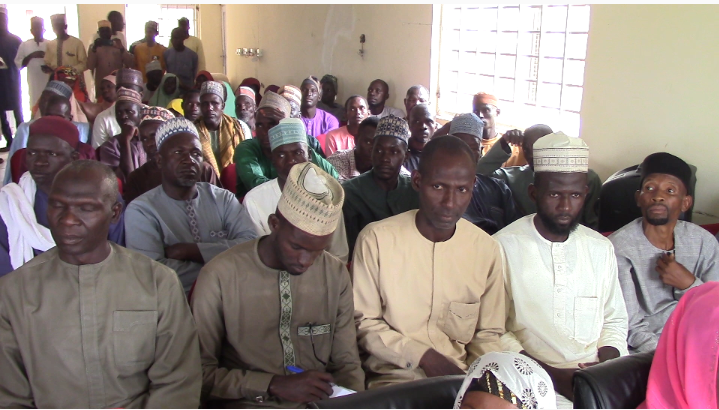
The Upper Benue River Basin Development Authority (UBRBDA), Daɗinkowa Area Office, in partnership with the Centre for Climate-Smart Agriculture at Cosmopolitan University, Abuja, has concluded a two-day workshop aimed at equipping Gombe farmers with modern agricultural techniques to enhance yields and strengthen food security.
The lead facilitator and Chief Scientific Officer at Cosmopolitan University, Professor Badaru Yahaya Usman, emphasized that climate-smart agriculture allows farmers to achieve significant production improvements with minimal land, water, and resources.
Highlighting the efficiency of these methods, Professor Usman noted, “In climate-smart agriculture, you can harvest crop yield in a single hectare of land equivalent to that harvested on ten hectares of land.”
He further explained that these scientific methods enable farmers to manage low water levels and poor soil moisture retention by utilizing innovative irrigation strategies and atmospheric nutrient integration.
To support year-round production, the centre intends to provide farmers with access to smart borehole loans. These advanced systems are capable of reaching water at depths of up to 300 meters and feature remote monitoring capabilities.
Professor Usman assured participants that the center would provide a ten-year warranty on the equipment and handle repairs for any non-intentional damage.
Additionally, he noted that the center could use geospatial techniques to remotely analyze soil composition, providing farmers with data-driven advice on optimal planting decisions.
Alhaji Abubakar Muhammad Bello, the Area Manager of the UBRBDA Daɗinkowa office, stated that the training was designed to ensure farmers are fully versed in emerging technologies before receiving institutional support or loan interventions.
He urged participants to engage actively with the curriculum, noting, “Our target is for you to cultivate a hectare of land through climate-smart agriculture and get what is now obtainable on ten hectares in non-climate-smart agriculture.”
He stressed that science is making farming increasingly simpler and lucrative, urging the participants to capitalize on the opportunity.
The potentials of modern agriculture was echoed by a seasoned farmer Alhaji Muhammad Auwal, who remarked that his experience in the sector had proven far more profitable than his entire career in the civil service.
The Chairman of the Water Users Association, Alhaji Idris K. Shehu, expressed gratitude on behalf of the farming community, commending the UBRBDA for its consistent commitment to prioritizing the needs of local farmers and pledging the association’s full dedication to adopting these new methods.
Following the workshop, the training team visited the Federal College of Horticulture, Daɗinkowa, to explore potential partnerships.
The college’s Acting Provost, Dr. Umar Abdullahi Umar, welcomed the initiative and expressed a strong commitment to establishing a fruitful collaboration to further promote climate-smart agricultural practices in the region.”Revolutionizing Yields: UBRBDA, Cosmopolitan University Empower Gombe Farmers with Climate-Smart Techniques”
By Yunusa Isa, Gombe
The Upper Benue River Basin Development Authority (UBRBDA), Daɗinkowa Area Office, in partnership with the Centre for Climate-Smart Agriculture at Cosmopolitan University, Abuja, has concluded a two-day workshop aimed at equipping Gombe farmers with modern agricultural techniques to enhance yields and strengthen food security.
The lead facilitator and Chief Scientific Officer at Cosmopolitan University, Professor Badaru Yahaya Usman, emphasized that climate-smart agriculture allows farmers to achieve significant production improvements with minimal land, water, and resources.
Highlighting the efficiency of these methods, Professor Usman noted, “In climate-smart agriculture, you can harvest crop yield in a single hectare of land equivalent to that harvested on ten hectares of land.”
He further explained that these scientific methods enable farmers to manage low water levels and poor soil moisture retention by utilizing innovative irrigation strategies and atmospheric nutrient integration.
To support year-round production, the centre intends to provide farmers with access to smart borehole loans. These advanced systems are capable of reaching water at depths of up to 300 meters and feature remote monitoring capabilities.
Professor Usman assured participants that the center would provide a ten-year warranty on the equipment and handle repairs for any non-intentional damage.
Additionally, he noted that the center could use geospatial techniques to remotely analyze soil composition, providing farmers with data-driven advice on optimal planting decisions.
Alhaji Abubakar Muhammad Bello, the Area Manager of the UBRBDA Daɗinkowa office, stated that the training was designed to ensure farmers are fully versed in emerging technologies before receiving institutional support or loan interventions.
He urged participants to engage actively with the curriculum, noting, “Our target is for you to cultivate a hectare of land through climate-smart agriculture and get what is now obtainable on ten hectares in non-climate-smart agriculture.”
He stressed that science is making farming increasingly simpler and lucrative, urging the participants to capitalize on the opportunity.
The potentials of modern agriculture was echoed by a seasoned farmer Alhaji Muhammad Auwal, who remarked that his experience in the sector had proven far more profitable than his entire career in the civil service.
The Chairman of the Water Users Association, Alhaji Idris K. Shehu, expressed gratitude on behalf of the farming community, commending the UBRBDA for its consistent commitment to prioritizing the needs of local farmers and pledging the association’s full dedication to adopting these new methods.
Following the workshop, the training team visited the Federal College of Horticulture, Daɗinkowa, to explore potential partnerships.
The college’s Acting Provost, Dr. Umar Abdullahi Umar, welcomed the initiative and expressed a strong commitment to establishing a fruitful collaboration to further promote climate-smart agricultural practices in the region.