
By Vasty Bala Jonah, Gombe
Health experts in Gombe State have emphasized that regular antenatal care during pregnancy remains essential for the early detection and effective management of preeclampsia before it develops into a life-threatening condition for both mother and child.
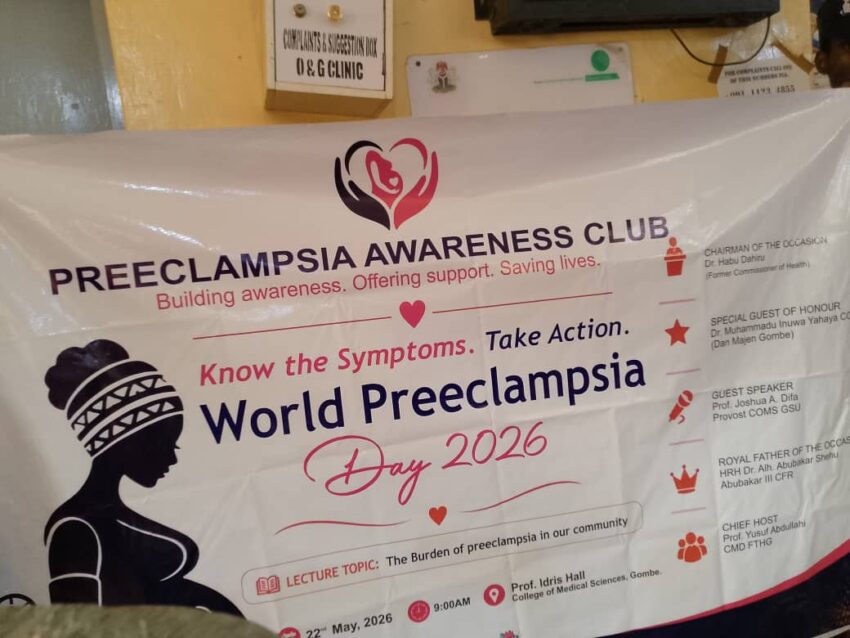
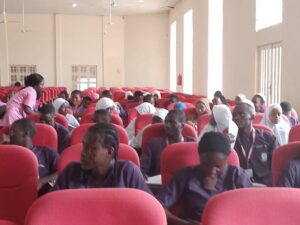
The experts made the call on Friday during the maiden commemoration of World Preeclampsia Day organized by the Preeclampsia Awareness Club, Gombe, at the Professor Idris Hall, College of Medical Sciences, Gombe. The event was held to mark this year’s World Preeclampsia Day observed every May 22, under the theme: “Know the Symptoms and Take Action.”
Chairman of the occasion and former Commissioner for Health in Gombe State, Dr. Habu Ɗahiru, described preeclampsia as a preventable and treatable condition when detected early through consistent antenatal care.
He stressed that no woman should lose her life during childbirth from a condition that can be effectively managed if identified on time.
According to him, pregnant women should begin antenatal care early and attend clinics regularly throughout pregnancy, noting that the World Health Organization recommends at least eight antenatal visits before delivery.
Dr. Ɗahiru explained that preeclampsia often develops silently and may initially resemble normal pregnancy-related stress before progressing to severe complications such as seizures, organ failure, maternal death, and loss of the baby.
He listed warning signs of the condition to include severe headache, blurred vision, swelling of the face and hands, high blood pressure, and protein in urine.
The former commissioner urged families to immediately take pregnant women experiencing such symptoms to the hospital instead of keeping them at home.
He also called on traditional rulers, religious leaders, women groups, and community organizations to intensify awareness campaigns and encourage pregnant women to register early for antenatal care.
According to him, protecting mothers’ lives is critical to the wellbeing of families and communities, as maternal deaths during childbirth often leave devastating consequences for children and families.
In her welcome address, Chairperson of the Preeclampsia Awareness Club, Dr. Amina Rabiu Baba, said preeclampsia has become one of the leading causes of maternal and perinatal deaths in Nigeria, particularly in the Northeast.
She disclosed that over 1,200 women with hypertensive disorders during pregnancy were managed at the Federal Teaching Hospital, Gombe, in 2025 alone, with more than 80 percent presenting severe cases of preeclampsia and eclampsia.
Dr. Amina noted that many women still fail to access antenatal care early, while others remain unaware of the symptoms until complications arise.
She explained that the awareness club was established to extend sensitization campaigns beyond hospitals into communities, markets, places of worship, and rural settlements to educate women and families on prevention and early detection.
Delivering the keynote address, the Provost of the College of Medical Sciences, Gombe State University, Professor Joshua Abubakar Ɗifa, described preeclampsia and eclampsia as major contributors to maternal and newborn deaths in the region.
He noted that most affected women are young, poor, uneducated, and living in rural communities where access to healthcare services remains limited.
Professor Ɗifa called for stronger community awareness, improved primary healthcare services, training of health workers, and the involvement of traditional birth attendants in referring pregnant women with danger signs to health facilities promptly.
He added that early antenatal care enables health workers to detect not only preeclampsia but also other pregnancy-related complications that may threaten the lives of mothers and babies.
In his vote of thanks, former Vice Chancellor of Gombe State University and initiator of the Preeclampsia Awareness Club, Professor Aliyu Usman El-Nafaty, appreciated participants for supporting the initiative and called for collective action to prevent avoidable maternal and newborn deaths caused by preeclampsia.