
By Yunusa Isa, Gombe
Tsangaya and Islamiyya schools have been urged to register with the Gombe State Ministry of Education to enable them to benefit from Federal Government educational development support and integration programmes.
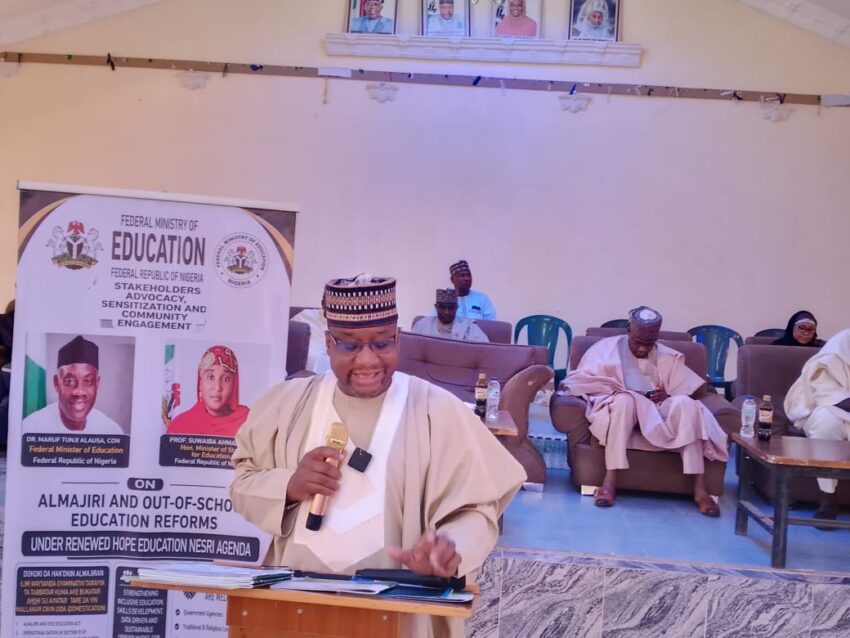
The call was made by the Minister of Education, Dr Tunji Alausa, during a joint stakeholder meeting in Gombe organized by the Federal Ministry of Education in collaboration with the Gombe State Ministry of Education to discuss educational integration and unveil policies and modalities for safeguarding the educational rights and protection of Tsangaya and Islamiyya students.
Represented by his Special Adviser on Almajiri and Tsangaya Education, Dr Balarabe Shehu Kakale, the minister said newly introduced policies, regulations, and frameworks require the integration of vocational skills training into the curriculum as part of efforts to tackle youth unemployment and reduce dependence on white-collar jobs.
“Under the revised national education policies, any community space or residence used for teaching and instruction is officially recognized as an educational institution, making such centres eligible for government oversight, funding, and support at various levels,” Dr Kakale stated.
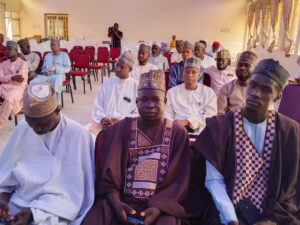
He therefore encouraged proprietors of Tsangaya and Islamiyya schools to register with the state Ministry of Education and other relevant educational authorities to gain access to government support and educational development initiatives.
To ensure inclusivity, the minister presented policy documents, models, and implementation frameworks written in English, Hausa, Arabic, and Ajami.
“We are committed to ensuring that no child, skill, or education system is left behind in our collective journey toward universal education for all,” he noted.
The Gombe State Commissioner for Education, Professor Aishatu Umar Maigari – represented by the ministry’s Permanent Secretary, Abubakar Hassan – said the state government had made significant progress in modernizing Tsangaya and Islamiyya education through the establishment of integrated model schools and residential facilities across the 11 local government areas of the state.
She, however, urged the federal government to ensure effective implementation of the programmes by directly providing states with the necessary funds, learning materials, and other resources required to achieve the desired objectives.
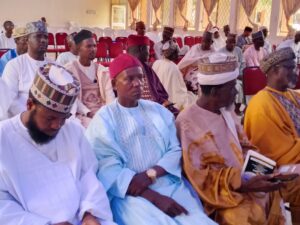
In their separate goodwill messages, stakeholders commended the initiative and encouraged Tsangaya and Islamiyya schools to actively participate in the reform process.
Others who contributed during a goodwill message include the Executive Secretary of the National Almajiri Education Commission, Dr Muhammad Sani Idris, represented by Halliru Musa Halliru; Provost of AD Rufa’i College of Legal and Islamic Studies, Misau, Dr Muhammad Mustapha; Executive Chairman of the Gombe State Universal Basic Education Board, Professor Hassan Bello; Special Adviser to the Gombe State Governor on Tsangaya and Almajiri Affairs, Sayyada Amina Dahiru Usman Bauchi; Secretary-General of Jama’atu Nasril Islam in Gombe State, Alhaji Sale Danburam; and prominent Qur’anic scholar, Alaramma Goni Sadisu Mai Babban Allo.
The stakeholders pledged their cooperation towards ensuring the successful implementation of the programmes and the attainment of the set objectives.
The federal and state initiatives are aimed at addressing the challenge of out-of-school children while improving the standard, regulation, and integration of Tsangaya and Islamiyya education across Nigeria.