
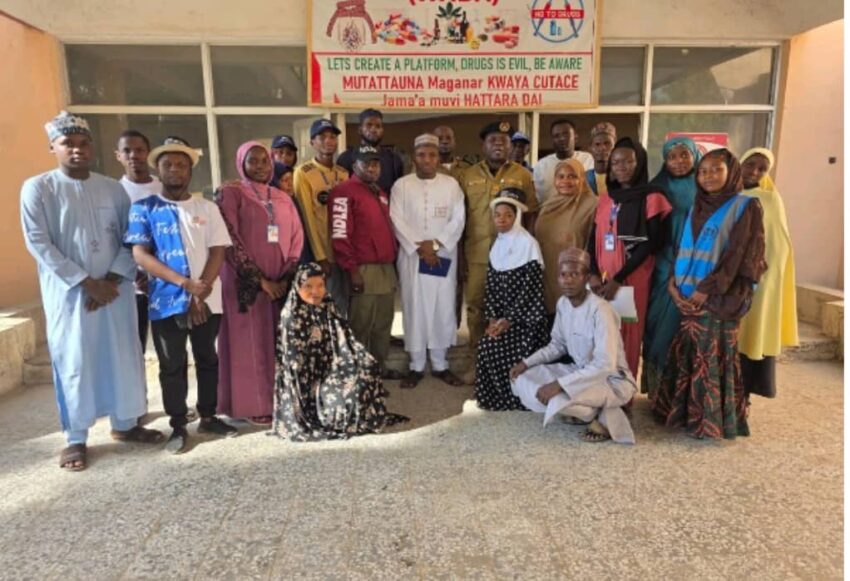
By Atiku Galadima, Maiduguri
The Peace Ambassadors Centre for Humanitarian Aid and Empowerment (PACHE) has reinforced its partnership with the National Drug Law Enforcement Agency (NDLEA) in Borno State, underscoring the importance of youth-led initiatives in tackling substance abuse.
Speaking during a strategic advocacy and courtesy visit to the newly appointed NDLEA State Commandant, Usman Sule, PACHE’s President and Founder, Ambassador Ahmed Shehu, highlighted the organisation’s ongoing initiatives, particularly the mentorship of 100 youth advocates under the British Council-funded program. He said the meeting aimed to explore avenues for expanding community-based drug prevention and rehabilitation programs.
According to Shehu, the youth advocates have led community sensitisation campaigns, town hall meetings, and peace-building activities across various communities, demonstrating the impact of grassroots interventions in changing attitudes toward drug abuse. Youth advocate Bashir Haruna shared practical examples, including a town hall session held three months ago, which successfully raised awareness of substance abuse risks and strengthened local support networks.
Commandant Sule commended PACHE for its community-centred approach, noting that effective drug prevention requires collaboration with trusted local actors and youth leaders, particularly in areas where the agency’s direct presence is limited.
Representatives of the Bulabulin Community Progressive Group also highlighted local drug abuse challenges and expressed readiness to work with both PACHE and NDLEA on future interventions. Development partner GIZ inquired about rehabilitation services, prompting the Commandant to explain that NDLEA operates a no-maintenance facility, with post-admission care and reintegration support managed by referring organisations or community groups.
The visit concluded with a ceremonial presentation in which the Commandant was decorated with PACHE’s Youth Advocate emblem, and project-branded materials, including T-shirts, caps, and diaries, were handed over to symbolise partnership and goodwill.
The engagement not only strengthened institutional relationships but also enhanced the visibility and credibility of youth advocates, while fostering direct linkages between community groups and law enforcement for sustained collaboration.
The meeting brought together trained youth advocates, community representatives, and development partners. While significant progress was acknowledged, stakeholders also noted challenges, particularly the additional responsibilities placed on communities for post-rehabilitation support and the growing demand for drug prevention initiatives across multiple communities. Nonetheless, the visit highlighted the effectiveness of youth-led advocacy, the importance of early engagement with new leadership, and the value of multi-stakeholder collaboration in addressing complex social issues such as drug abuse in Borno State.