
By Yunusa Isa, Gombe
Islamic scholars across Gombe State have been urged to adopt modern fact-checking techniques to combat the rising tide of misinformation and fake news within the digital space.
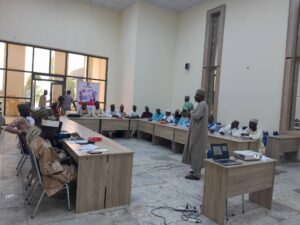
This call was made during a two-day capacity-building workshop organized by the Alƙalanci media organization, which brought together key religious leaders from various Islamic sects to engage with media experts on strategies for identifying and controlling false narratives.
The Chief Editor of Alƙalanci and fact-checking expert, Comrade Alhassan Bala, emphasized that the workshop specifically targeted Islamic scholars due to their influential role in shaping societal discourse, particularly at a time when unverified information has become prevalent on digital platforms.
Bala noted that “With Nigeria approaching the 2027 general elections, the ability to identify and neutralize fake news is now a matter of national peace and stability”.
Echoing these sentiments, the Emir of Gombe, Alhaji Dr. Abubakar Shehu Abubakar III, represented by Alhaji Abubakar Isma’il Abubakar, charged the clerics to strictly adhere to Islamic principles regarding the verification of information before sharing it with followers.
This mandate was supported by veteran media professionals, including the President of the Nigeria Union of Journalists (NUJ), Comrade Alhassan Yahaya, and the Director General of the Gombe Media Corporation (GMC), Dr. Ibrahim Isa.
The experts warned that the speed and reach of digital platforms have made the spread of misinformation increasingly difficult to contain, noting its potential to fuel communal tensions, political instability, and social unrest.
Participants at the event, including Sheikh Adam Muhammad Albany Gombe and Comrade Musliu Aliyu Pindiga, described the training as a timely intervention.
They acknowledged that the workshop provided practical strategies for verification, noting that Islam fundamentally emphasizes the importance of confirming the authenticity of news before taking action.
The urgency of the situation is underscored by data from the National Information Technology Development Agency (NITDA), which links the rapid growth of social media to the increased circulation of fake news in Nigeria.
Furthermore, the Centre for Democracy and Development has reported that misinformation has directly contributed to several communal and political crises in recent years, while UNESCO estimates that over 60 percent of internet users globally have encountered some form of false information.
By leveraging the social status and impact of religious leaders alongside media practitioners and community stakeholders, the intervention aims to promote responsible communication as a cornerstone for maintaining long-term peace and stability in Nigeria.
The two-day workshop concluded with a consensus among experts that addressing these challenges require a collective effort.