
By Yunusa Isa, Gombe
The Gombe State Muslim Pilgrims Welfare Board has expressed serious apprehension over Saudi Arabia’s new policy allocating approximately 98% of Nigeria’s 2027 Hajj seats to private operators, warning that the abrupt change threatens the nation’s conventional government-led pilgrimage system.
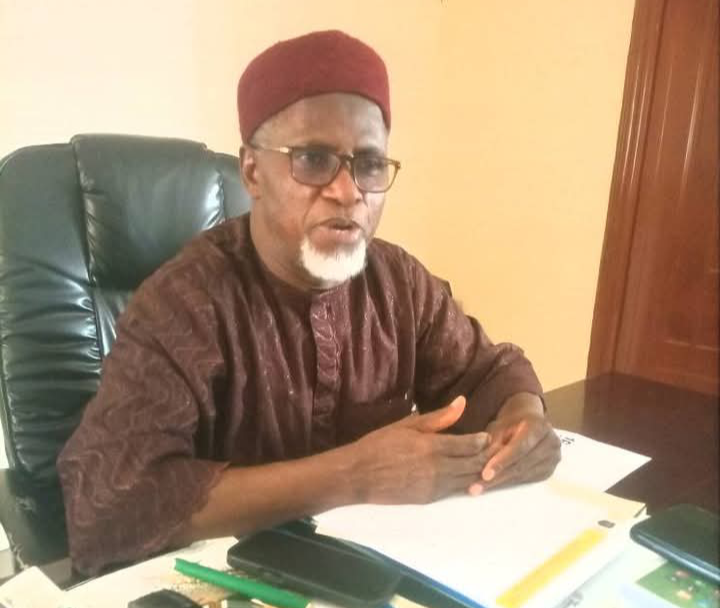
The Executive Secretary of the board, Alhaji Sa’adu Hassan, made this known while briefing journalists on the outcome of an emergency board meeting convened to review emerging challenges ahead of the 2027 pilgrimage.
According to Hassan, the directive—which was officially communicated to the Nigerian government through the National Hajj Commission of Nigeria (NAHCON), marks a radical departure from the country’s decades-long administrative framework.
“Nigerian pilgrims have traditionally depended on government-supervised structures to organize their pilgrimage. This proposed shift to private operators is a significant change that could raise genuine concerns among intending pilgrims, many of whom are far more comfortable dealing with trusted government agencies because of the direct supervision and protection they provide,” Hassan stated.
Clarifying the origins of the directive, the Executive Secretary emphasized that the policy was solely initiated by Saudi Arabian authorities as part of a broader global restructuring, rather than a decision by the Nigerian government.
He explained that Riyadh is progressively shifting its operational model to treat the annual pilgrimage strictly as a Business-to-Business (B2B) arrangement, phasing out the traditional government-to-business model.
In response to the development, Hassan disclosed that Nigerian authorities have already initiated moves to cushion the impact of the policy, noting that “NAHCON has formally approached the Minister of Foreign Affairs to leverage diplomatic channels in engaging Saudi authorities. The primary objective of the diplomatic engagement is to secure a phased transition period spanning one to three years.
He noted that the proposed transition period would give the Federal Government, state Hajj authorities, and intending pilgrims enough time to adjust to the new system and establish robust structures for effective coordination.
Despite the looming uncertainties, NAHCON has directed all state boards to commence preparations early to minimize potential disruptions as Nigeria gradually adapts to the evolving global framework.
Expressing optimism, Hassan noted that ongoing diplomatic engagements would yield a workable compromise that protects the interests of Nigerian pilgrims and guarantees a seamless operation for the 2027 Hajj.