
By Yunusa Isa, Gombe
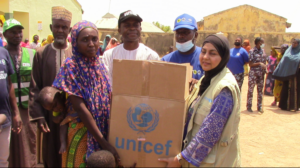
In a coordinated effort to avert a public health crisis, the Gombe State Rural Water Supply and Sanitation Agency (RUWASSA), in partnership with UNICEF, has distributed 600 sanitary and dignity kits to Internally Displaced Persons (IDPs) currently taking refuge in Kashere, Akko Local Government Area.
The displaced population, totaling over 7,000 individuals, fled their homes in more than 20 communities across Alkaleri Local Government Area in neighboring Bauchi State following a wave of violent banditry.
Representing the General Manager of Gombe RUWASSA, Engineer Muhammad Ahmad, the agency’s Administration Officer, Adamu Abdulƙadir Buji, emphasized that the intervention is part of a sustained humanitarian response.
“Considering the scale of the needs in this camp, RUWASSA requested additional support from UNICEF,” Buji stated during the presentation. “We are focusing on long-term solutions, including the rehabilitation of dilapidated boreholes and the drilling of new ones to ensure a steady water supply.”
Buji further noted that while the agency continues its campaign against open defecation, plans are underway to construct standard sanitation facilities at a proposed permanent relocation site.
The Head of the UNICEF Bauchi Field Office, Dr. Nuzrat Rafique, highlighted the vulnerability of the displaced population, particularly “zero-dose” children who have never received vaccinations.
“We are here to support immunization and maternal health services. Today’s distribution of hygiene and dignity kits is vital because poor sanitation creates a high risk for cholera outbreaks,” Dr. Rafique said.
Beyond immediate physical needs, UNICEF is also establishing “safe learning spaces” to provide education for children whose schooling was interrupted or who have never had access to a classroom.
The camp secretary, Dr. Babangida Bala, received the supplies on behalf of the displaced persons, commending RUWASSA and UNICEF for addressing the specific challenges of drugs and hygiene that often go overlooked in emergency settings.
Despite the recent influx of relief materials—including food, mattresses, and medical supplies from both the Gombe and Bauchi state governments—the situation on the ground remains precarious, as families are currently housed in classrooms, open-air spaces, and makeshift tents made of tarpaulin and fabric.
The majority of the displaced are women and children, many of whom arrived with no personal belongings.
Humanitarian workers have warned that the approaching rainy season will exacerbate the need for robust shelter and drainage.
For many in the camp, the trauma of the night attacks remains fresh. Survivors such as Malam Usman Mai Jirgi, Maryam Namanda, and Hafsat Adamu described fleeing their villages under gunfire, arriving in Kashere after days of trekking.
While the immediate intervention by RUWASSA and UNICEF has restored a sense of dignity to the displaced families, the consensus among camp officials and survivors remains clear: while aid is appreciated, the ultimate goal is a return to their ancestral homes once security is restored.